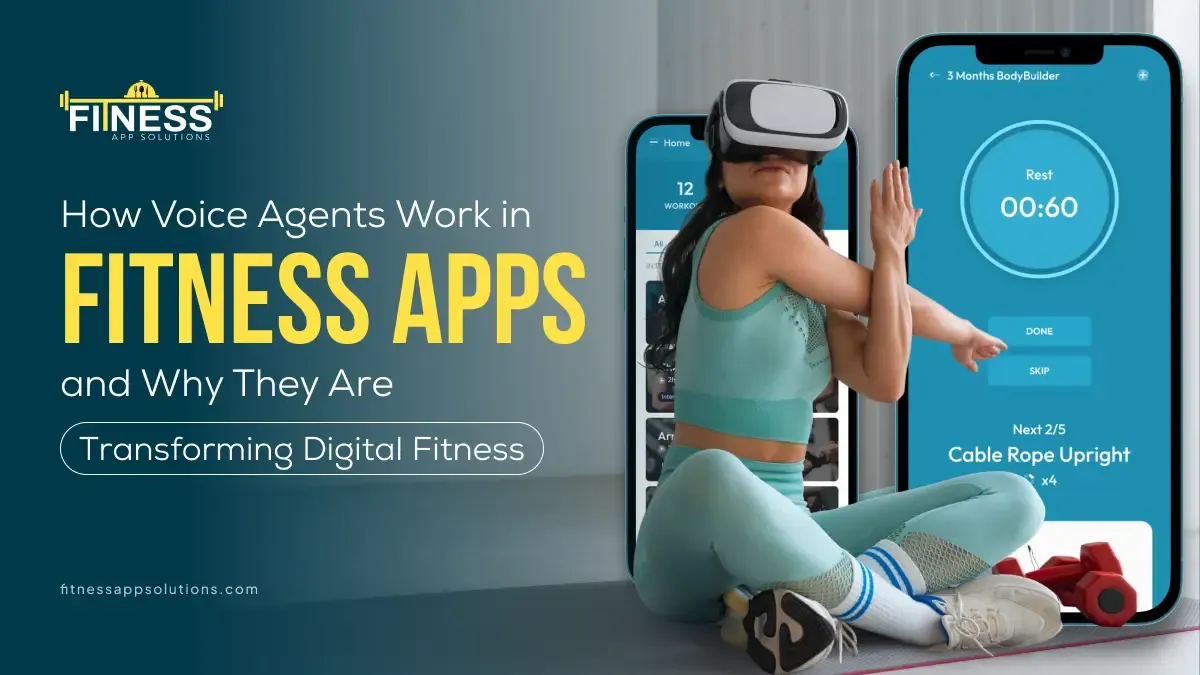
Digital fitness has evolved rapidly over the last decade. From simple workout trackers to AI-powered personal training platforms, technology is redefining how people stay healthy. One of the most exciting developments in this space is the rise of voice agents in fitness apps.
Voice-enabled systems allow users to interact with their fitness applications using natural language commands. Instead of tapping through menus, users can simply say things like “Start my workout,” “Track my calories,” or “How many steps did I take today?” This hands-free interaction is transforming digital fitness experiences.
With the global AI voice assistant, the global AI in personal training market is projected to reach $1.2B by 2027, with a CAGR of 22.3%, voice-driven technology is becoming a core component of modern apps. In the fitness industry, it is helping users stay engaged, motivated, and consistent with their health goals.
Understanding Voice Agents in Fitness Apps
Voice agents are AI-powered systems that allow users to interact with apps through spoken commands. They combine natural language processing (NLP), speech recognition, and machine learning to understand and respond to user requests.
In fitness apps, voice agents act like virtual trainers. They guide users through workouts, answer questions, provide health insights, and even help schedule training sessions.
For example, a user might say:
- “Start my 20-minute HIIT workout.”
- “How many calories did I burn today?”
- “Remind me to drink water every hour.”
The voice agent processes the request, retrieves relevant data from the app, and provides real-time feedback.
An estimated 8.4 billion digital voice assistants were in use globally in 2024, an increase from 4.2 billion in 2020, surpassing the global population. This surge is driving businesses across industries, including fitness, to integrate voice technology into their digital products.
Modern fitness platforms that combine AI, analytics, and personalization, such as integrated fitness solution platforms, are increasingly adopting voice agents to improve user engagement and retention.
How Voice Agents Work Inside Fitness Applications?
To understand the impact of voice technology, it’s important to see how voice agents actually function within an app.
1. Speech Recognition:
The first step is converting spoken words into text. Voice recognition engines capture audio from the user and transcribe it instantly. 85% of consumers report being satisfied with their voice assistant interactions.
2. Natural Language Processing
Once the speech is converted to text, the system analyses it using NLP algorithms. This allows the app to understand the user’s intent rather than just recognizing keywords. For example, if a user says, “I want to lose weight,” the voice agent interprets the goal and suggests workouts, meal plans, or progress tracking.
3. Data Integration
The voice agent then connects with various parts of the app, workout databases, health metrics, or nutrition tracking systems, to deliver relevant results. Platforms offering advanced meal planning tools often integrate voice commands so users can ask questions like:
- “What should I eat after a workout?”
- “How many calories are in my meal plan today?”
4. Voice Feedback
Finally, the system responds with spoken feedback or on-screen instructions. This can include workout guidance, progress updates, or motivational prompts. This seamless process creates an interactive, hands-free experience that enhances usability and convenience.
What are the Key Features of Voice Agents in Fitness Apps?
Voice technology introduces several powerful features that enhance digital fitness platforms.
Hands-Free Workout Control:One of the biggest advantages of voice agents is hands-free interaction. Users can control workouts without stopping their exercise session. For instance, while lifting weights or running, a user can say:
- “Pause workout”
- “Increase timer to 45 seconds.”
- “Play the next exercise.”
This improves convenience and keeps the workout flow uninterrupted.
Personalized Coaching
Voice agents can act as virtual coaches. They analyse user data, such as heart rate, activity levels, and fitness goals, to provide tailored guidance. Research shows that personalization can increase customer engagement by up to 20%, making voice-driven fitness experiences more effective.
Progress Tracking
Voice-enabled apps allow users to quickly access fitness insights. Instead of navigating through dashboards, users can simply ask:
- “How many calories did I burn this week?”
- “What’s my progress toward my weight goal?”
This immediate feedback helps users stay motivated.
Appointment and Class Scheduling
AI voice agents can also manage bookings for gym classes, training sessions, or consultations. Users might say:
- “Book a yoga class tomorrow at 6 PM.”
- “Schedule a session with my trainer.”
Automating these tasks saves time for both users and fitness businesses.
What are the Benefits of Voice Agents for Fitness App Users?
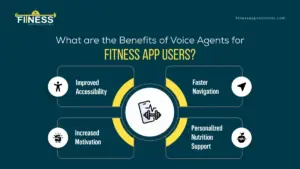
Voice-enabled fitness technology provides several advantages that significantly improve the user experience.
1.Improved Accessibility
Voice interaction makes fitness apps easier to use for people with disabilities or those who struggle with traditional interfaces. For example, visually impaired users can rely on spoken instructions rather than reading text on the screen.
2.Increased Motivation
Voice agents can act as motivational coaches. During workouts, they can provide encouragement such as:
- “You’re halfway through your workout.”
- “Great job! Keep going for another 30 seconds.”
Studies published in the Journal of Medical Internet Research show that real-time feedback increases workout adherence and consistency.
3.Faster Navigation
Voice commands eliminate the need for manual navigation. Instead of tapping through menus, users can instantly access features. This is particularly useful during workouts when users want quick responses without interrupting their routine.
4.Personalized Nutrition Support
Many fitness apps integrate voice assistants with nutrition tracking tools. Users can ask questions about calories, protein intake, or meal timing. For example:
- “What should I eat after strength training?”
- “Add a protein shake to my meal log.”
This integration bridges the gap between exercise and nutrition management.
How Voice Agents Are Transforming the Fitness Industry?
The rise of voice technology is not just improving user experiences; it is also reshaping the entire fitness ecosystem.
Digital Personal Trainers
Voice agents can simulate personal training sessions by guiding users step-by-step through exercises. This allows fitness apps to deliver coaching services without requiring human trainers for every user.
Smart Home Workouts
Voice integration with smart speakers and home devices allows users to start workouts using simple commands like:
- “Start my morning yoga session.”
This creates a connected home fitness environment.
Gym Automation
Fitness centers are also adopting AI voice agents for customer service tasks such as answering inquiries, booking classes, and managing memberships. These systems reduce administrative workload and improve response times.
Data-Driven Fitness Programs
Voice agents collect valuable data about user habits, preferences, and performance. This data can be used to improve training recommendations and develop more effective fitness programs.
Challenges and Considerations
Despite their advantages, voice agents in fitness apps also present several challenges.
Privacy Concerns
Voice assistants process sensitive user data such as health information, location, and activity levels. Developers must implement strong data security and privacy measures.
Voice Recognition Accuracy
Although voice recognition technology has improved significantly, accents, background noise, and pronunciation variations can still affect accuracy. Developers need advanced AI models and continuous training data to improve recognition quality.
Integration Complexity
Building voice-enabled systems requires integration with multiple technologies, including AI models, APIs, wearable devices, and health databases. This increases development complexity and costs.
However, as AI technology continues to evolve, these challenges are becoming easier to address.
The Future of Voice-Enabled Fitness Apps
The future of voice technology in fitness looks incredibly promising. As AI capabilities improve, voice agents will become even more intelligent and personalized.
Here are some emerging trends shaping the next generation of fitness apps:
Emotion-Aware Voice Coaching
Future voice agents may detect emotional cues in a user’s voice and adjust their coaching style accordingly. For example, they might provide extra motivation if a user sounds tired or discouraged.
Real-Time Biometric Integration
Voice assistants will integrate with wearable devices to analyse heart rate, oxygen levels, and activity patterns in real time. This will allow them to adjust workouts dynamically for safety and effectiveness.
Multilingual Voice Interaction
Advanced AI systems will support multiple languages and regional accents, making fitness apps accessible to a global audience.
AI-Powered Lifestyle Coaching
Voice agents will expand beyond workouts to offer holistic health guidance, including sleep optimization, stress management, and nutrition planning.
Conclusion
Voice technology is rapidly transforming the way people interact with fitness applications. By enabling natural, hands-free communication, voice agents in fitness apps make digital workouts more accessible, personalized, and engaging.
From guiding exercises and tracking progress to managing meal plans and scheduling sessions, voice agents are becoming intelligent fitness companions.
As artificial intelligence continues to evolve, voice-driven interfaces will likely become a standard feature in modern fitness platforms. Businesses that adopt this technology early will be better positioned to deliver immersive and highly personalized fitness experiences.
In the coming years, voice-enabled digital fitness may feel less like using an app and more like having a real personal trainer by your side.
Frequently Asked Questions (FAQs)
What are voice agents in fitness apps?
Voice agents in fitness apps are AI-powered assistants that allow users to interact with their fitness applications using voice commands. They use technologies like speech recognition, natural language processing (NLP), and machine learning to understand user requests and provide responses such as starting workouts, tracking calories, or offering fitness guidance.
How do voice agents improve the fitness app experience?
Voice agents improve the fitness experience by enabling hands-free control, personalized workout guidance, and real-time feedback. Users can start workouts, track progress, and receive coaching simply by speaking, making workouts more convenient and engaging.
Can voice agents act as personal fitness trainers?
Yes, voice agents can function as virtual fitness trainers. They can guide users through exercises, suggest workout routines based on fitness goals, track performance metrics, and provide motivational feedback during workouts.
Are voice-enabled fitness apps safe and secure?
Most voice-enabled fitness apps use data encryption, secure cloud storage, and privacy protection measures to safeguard user information. However, developers must ensure proper security practices to protect sensitive health and voice data.
What devices support voice-enabled fitness apps?
Voice-enabled fitness apps can work with smartphones, smartwatches, smart speakers, and wearable fitness trackers. Integration with devices like smart home assistants allows users to start workouts or check fitness progress using voice commands.
What is the future of voice agents in digital fitness?
The future of voice agents in digital fitness includes emotion-aware coaching, real-time biometric analysis, multilingual support, and deeper integration with wearable technology. These advancements will make fitness apps more personalized, interactive, and intelligent.